

Time can be a tricky little beast, especially when you’re staring at the clock, wondering just how long till 2:33. Whether you’re waiting for that much-anticipated meeting to end or counting down to your favorite show, the seconds can feel like hours. But fear not! Understanding time intervals doesn’t have to be a headache-inducing math problem.
In this article, we’ll break down the art of countdowns and time management with a sprinkle of humor. You’ll learn not just how to figure out when 2:33 rolls around but also how to make the wait a little more bearable. So grab your favorite snack, kick back, and let’s dive into the fascinating world of time—because who knew waiting could be this fun?
Understanding the Concept of Time
Time functions as a continuous progress of existence, measured in hours, minutes, and seconds. Each second counts, creating a framework for daily schedules and activities. People often break time into smaller intervals to manage tasks effectively. For example, splitting an hour into four 15-minute segments can provide clarity and structure.
Commonly, humans measure time using clocks and calendars. Clocks denote specific times, while calendars organize longer periods. The 24-hour clock system displays time in a straightforward manner, making it easy to understand. For instance, 2:33 can be broken down into 2 hours and 33 minutes, illustrating the precise moment one anticipates.
Anticipating time can evoke various feelings, including excitement or anxiety. Knowing how long until 2:33 enhances one’s ability to prepare for events. It transforms waiting into a purposeful act rather than a sedentary experience. One can use various strategies to keep busy during this waiting period.
Engaging in activities like reading, exercising, or completing small chores allows individuals to stay productive. Additionally, time management techniques such as setting milestones can create a sense of progress. For example, counting down from 30 minutes can offer a tangible goal, making the wait feel shorter.
When it comes to understanding time, perception plays a significant role. Some moments seem to linger, while others fly by. Recognizing the subjective nature of waiting influences how one approaches anticipation. Embracing the concept of time can lead to more enjoyable experiences and less stress while waiting for specific moments, such as 2:33.
Calculating Time Intervals
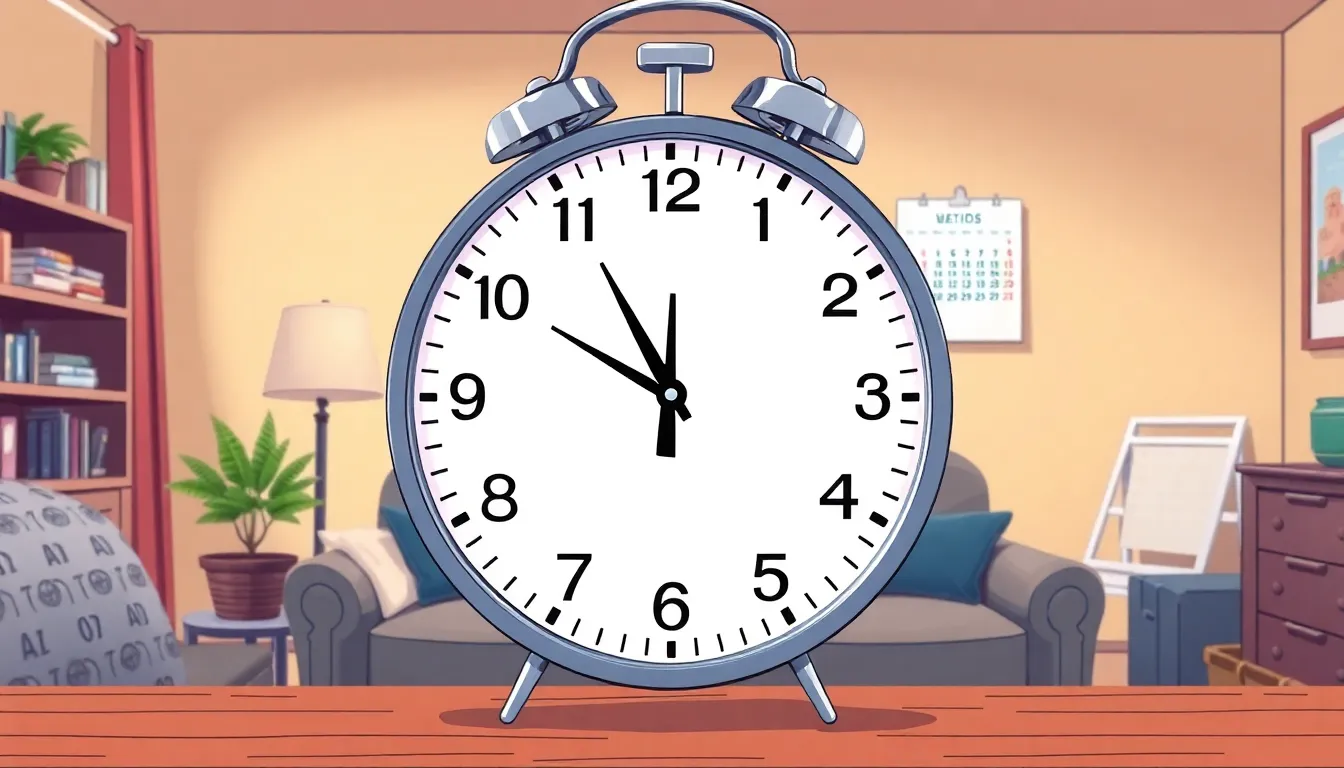
Calculating time intervals simplifies the anticipation of specific moments. Understanding hours, minutes, and seconds allows individuals to gauge how long remains until a target time.
The Basics of Time Calculation
Time calculation involves basic arithmetic with hours and minutes. Start with the current time and determine how many minutes or hours until the desired moment arrives. For example, if it’s 1:45 PM and someone wants to know the time left until 2:33 PM, they subtract the two times. The difference is 48 minutes. Familiarity with the 24-hour clock system aids clarity in these calculations. Recognizing the relationship between hours and minutes helps individuals manage expectations effectively during waiting periods.
Examples of Time Intervals
Time intervals can illustrate how to approach waiting situations. If a meeting starts at 10:15 AM and it’s currently 9:30 AM, there’s 45 minutes left to prepare. Another instance involves a favorite TV show starting at 8:00 PM while it’s currently 6:30 PM, indicating an hour and a half of anticipation. Various activities can fill those intervals, allowing individuals to engage in productive or enjoyable tasks. Understanding these examples aids individuals in managing time perception and reducing anxiety associated with waiting.
The Specifics of 2:33
Understanding the time left until 2:33 can significantly enhance planning and productivity. Knowing the specific moment helps avoid surprises and promotes a more organized approach to tasks.
Importance of Knowing Time
Knowing the exact time matters for effective time management. It allows individuals to allocate resources and adjust schedules accordingly. Awareness of remaining minutes until 2:33 can reduce stress related to meetings or events. Being informed also leads to better decision-making and prioritizes urgent tasks. Individuals can focus on what’s important without the distraction of uncertainty. Clarity about time intervals fosters a more relaxed mindset, making waiting periods more tolerable.
Practical Applications
Practical uses for knowing how much time remains until 2:33 include scheduling activities effectively. Individuals might complete urgent tasks or take a break to recharge before an appointment. Engaging in hobbies or reading provides enjoyment while passing the time. Utilizing apps or timers can reinforce the countdown, keeping attention on the target. Contextualizing time intervals into daily routines helps improve productivity. Also, planning meals or exercise around that moment creates rhythm in daily life. Efficient time management ultimately leads to satisfaction and minimizes anxiety.
Strategies for Time Management
Effective time management enhances productivity and alleviates stress during waiting periods. Prioritizing tasks creates a structured way to approach the day. Utilizing a task list helps streamline responsibilities, ensuring essential actions happen first. Breaking larger tasks into smaller, manageable chunks makes overwhelming goals achievable.
Engaging in timers or countdown apps provides visible reminders of remaining time until important moments. These tools not only keep individuals focused but also aid in gauging progress. Scheduling specific time blocks for each activity offers clarity in daily routines.
Incorporating short breaks contributes to sustained energy levels. Planning time for rest ensures that attention doesn’t wane during longer tasks. Adjusting environments can further promote focus by minimizing distractions.
Setting deadlines encourages individuals to work efficiently. Assigning a timeframe for miscellaneous tasks, like responding to emails, boosts commitment and urgency. Establishing milestones within projects offers a sense of accomplishment.
Utilizing techniques like the Pomodoro method, which involves working for short, defined intervals, helps maintain concentration. Adopting this strategy encourages quick bursts of productivity interspersed with breaks.
Reflecting on priorities regularly ensures alignment with goals. Adjusting priorities based on tasks’ urgency or importance allows for effective resource management. Recognizing when to pivot between activities enhances overall adaptability.
Staying mindful of time, particularly leading up to key moments, transforms waiting into a productive period. By implementing these strategies, individuals can manage their time effectively and reduce stress in anticipation of specific events or deadlines.
Understanding how long until 2:33 or any specific time can significantly enhance one’s ability to manage time effectively. By embracing the countdown, individuals can turn anticipation into a focused and productive experience. Engaging in meaningful activities while waiting not only alleviates anxiety but also enriches the overall experience.
Implementing time management strategies can transform the way one perceives waiting. With the right approach, individuals can prioritize tasks and make the most of every moment. Whether it’s through setting milestones or utilizing timers, these techniques empower individuals to take control of their time and reduce stress.

